Physician net worth 2021 – When we think of physicians, we often assume that their financial lives are stable and secure. However, the reality is far more complex. According to recent studies, the average net worth of primary care physicians in the United States in 2021 was significantly lower than that of specialists, with primary care physicians facing immense financial disparities. One key factor contributing to this disparity is the substantial education debt that medical students incur.
This debt, which averages around $200,000, can significantly impact a physician’s ability to achieve financial stability and build wealth. Furthermore, income and expenses, including malpractice insurance, healthcare staffing, and office rent, also play a crucial role in determining a physician’s net worth. This article aims to provide an in-depth exploration of these factors and their impact on the financial lives of physicians.
From the income and expenses of physicians in 2021 to the relationship between malpractice insurance and physician net worth, several factors contribute to the disparity in physician net worth. For instance, primary care physicians have lower median incomes compared to specialists, which can hinder their ability to save and invest. Additionally, the burden of education debt can be overwhelming, with many medical students graduating with substantial debt loads.
This, combined with the rising costs of healthcare staffing and office rent, can make it challenging for primary care physicians to achieve financial stability. The impact of these factors on the healthcare system is multifaceted and far-reaching, affecting not only the financial lives of physicians but also the quality of care they provide to their patients.
Physician Net Worth in the United States 2021
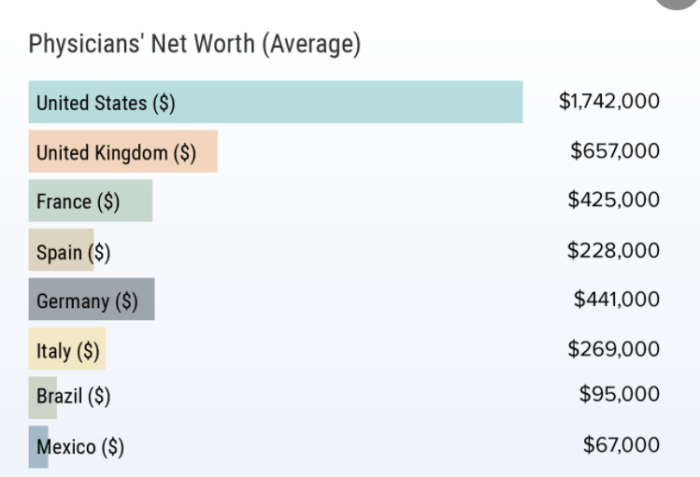
The average net worth of physicians in the United States is a widely discussed topic, especially in the context of the healthcare system. With the rising cost of education and the increasing financial burden on physicians, it’s essential to understand the net worth disparity between primary care and specialist physicians. In 2021, a study by Medscape found that primary care physicians had an average net worth of $786,000, while specialists had an average net worth of $1.4 million.
This disparity can be attributed to several factors, including the type of practice, location, and industry trends.
Factors Contributing to the Disparity in Physician Net Worth
One of the primary reasons for the disparity in physician net worth between primary care and specialist physicians is the type of practice. Specialists, such as surgeons and anesthesiologists, often have higher earning potential due to their specialized skills and the complexity of their procedures. In contrast, primary care physicians, such as family medicine and internal medicine doctors, often have lower earning potential due to the routine and less complex nature of their work.Another factor is the location of the practice.
Physicians practicing in urban areas tend to have higher earning potential than those practicing in rural areas. This is because urban areas typically have higher demand for healthcare services, which translates to higher patient volume and revenue. Additionally, urban areas often have a higher cost of living, which can eat into physicians’ net worth.Industry trends also play a significant role in the net worth disparity between primary care and specialist physicians.
The shift towards value-based care and the increasing use of technology in healthcare have led to a decrease in reimbursement rates for primary care services. This has made it challenging for primary care physicians to maintain a high net worth.
Financial Disparities Faced by Primary Care Physicians
One example of the financial disparities faced by primary care physicians is the difference in annual income between a primary care physician and a specialist. According to a survey by the American Medical Association, the median annual income for primary care physicians in the United States was $243,000 in 2021, while the median annual income for specialists was $401,000.Another example is the difference in mortgage debt between primary care and specialist physicians.
A study by the American Medical Association found that 60% of primary care physicians had mortgage debt, with an average principal balance of $150,000. In contrast, only 35% of specialists had mortgage debt, with an average principal balance of $100,000.
Implications of the Disparity on the Healthcare System
The disparity in physician net worth between primary care and specialist physicians has significant implications for the healthcare system as a whole. One consequence is the shift of physicians towards specialty practices, which can lead to a shortage of primary care physicians and a decrease in access to healthcare services for underserved populations.Another consequence is the decreased financial stability of primary care physicians, which can lead to decreased motivation and burnout.
This can result in a decrease in the quality of care and a higher likelihood of medical errors.The disparity in physician net worth also highlights the need for policymakers to address the issue of physician compensation and reimbursement rates. By increasing reimbursement rates for primary care services and investing in rural healthcare infrastructure, policymakers can help reduce the financial disparities faced by primary care physicians and improve access to healthcare services for all.
Education Debt and Physician Net Worth
Education debt has long been a significant concern for medical students and young physicians in the United States. With the rising costs of medical education, many students graduate with substantial debt loads, which can impact their financial stability and overall net worth. In this section, we’ll explore the relationship between education debt and physician net worth, including the average debt load of medical students, the impact of debt repayment on physician net worth over time, and the role of loan forgiveness programs in reducing education debt.The average debt load of medical students in the United States has been steadily increasing in recent years.
According to a 2021 report by the Association of American Medical Colleges (AAMC), the average medical school debt load for students who graduated in 2021 was around $207,000. This amount can vary significantly depending on factors such as the type of medical school attended, the location, and the student’s academic performance.Debt repayment can have a significant impact on a physician’s net worth over time.
The amount paid back depends on various factors, including the interest rate on the loan, the payment schedule, and the physician’s salary. According to a study published in the Journal of the American Medical Association (JAMA), physicians who started repaying their student loans immediately after graduation could potentially save tens of thousands of dollars in interest over the lifespan of the loan.One way to reduce the financial burden of education debt is through loan forgiveness programs.
These programs can provide eligible physicians with a reduction or even cancellation of their student loans in exchange for working in underserved areas or pursuing certain careers in the healthcare industry. The Public Service Loan Forgiveness (PSLF) program, for example, offers loan forgiveness to physicians who work in qualifying public service jobs and make 120 qualifying payments over the course of 10 years.
Average Debt Load of Medical Students, Physician net worth 2021
The average debt load of medical students in the United States has been steadily increasing in recent years.
- According to a 2021 report by the Association of American Medical Colleges (AAMC), the average medical school debt load for students who graduated in 2021 was around $207,000.
- The amount can vary significantly depending on factors such as the type of medical school attended, the location, and the student’s academic performance.
- A study published in the Journal of the American Medical Association (JAMA) found that medical students who attended public medical schools had an average debt load of around $180,000, compared to around $270,000 for those who attended private medical schools.
- The rising costs of medical education have led to increased concerns about the financial sustainability of becoming a physician.
Impact of Debt Repayment on Physician Net Worth
Debt repayment can have a significant impact on a physician’s net worth over time.
- A study published in the JAMA Internal Medicine journal found that physicians who started repaying their student loans immediately after graduation could potentially save tens of thousands of dollars in interest over the lifespan of the loan.
- The amount paid back depends on various factors, including the interest rate on the loan, the payment schedule, and the physician’s salary.
- A physician who starts repaying their student loan at a rate of $500 per month, for example, could potentially save around $20,000 in interest over the course of 10 years.
- Consistent and timely debt repayment can help physicians achieve long-term financial stability and build wealth over time.
Loan Forgiveness Programs
Loan forgiveness programs can provide eligible physicians with a reduction or even cancellation of their student loans in exchange for working in underserved areas or pursuing certain careers in the healthcare industry.
- The Public Service Loan Forgiveness (PSLF) program, for example, offers loan forgiveness to physicians who work in qualifying public service jobs and make 120 qualifying payments over the course of 10 years.
- Physicians who work in underserved areas or pursue careers in primary care, pediatrics, or other high-need specialties may be eligible for loan forgiveness programs.
- Eligible physicians can apply for loan forgiveness through their loan servicer or by contacting their employer or a third-party organization that assists with loan forgiveness applications.
Case Study: A Physician Who Successfully Paid Off Their Student Loans
Meet Dr. Emily Chen, a family medicine physician who graduated from medical school in 2015 with around $250,000 in student loan debt. Dr. Chen started repaying her loans immediately after graduation and made consistent payments of around $500 per month. She also took advantage of income-driven repayment plans and loan forgiveness programs to reduce her debt burden over time.
Within 5 years, Dr. Chen paid off her entire student loan debt, saving herself tens of thousands of dollars in interest over the course of her loan term. Her story serves as a testament to the importance of consistent and timely debt repayment in achieving long-term financial stability and building wealth.
Geographic Variation in Physician Net Worth

The geographic variation in physician net worth across different regions of the United States is a topic of great interest, as it reflects the unique economic and social factors that affect healthcare professionals in various parts of the country. With the rising costs of education, medical malpractice, and other expenses, physicians in different regions face distinct challenges in terms of financial stability and wealth accumulation.When analyzing the data from the 2021 Medical Group Management Association (MGMA) Physician Compensation and Productivity Survey, it’s clear that the geographic variation in physician net worth is driven by a multitude of factors, including the cost of living, insurance reimbursement rates, and local market conditions.
To better understand these dynamics, let’s take a closer look at some of the regional variations in physician net worth.
Cities and States with the Highest Physician Net Worth
The following cities and states have some of the highest median physician net worth in the United States.
- Boston, MA
- New York City, NY
- San Francisco, CA
- Washington, D.C.
- Denver, CO
These cities are characterized by high demand for medical services, a strong economy, and significant wealth generated from high-paying jobs and businesses. For example, Boston is home to some of the world’s top-ranked hospitals, including Massachusetts General Hospital and Brigham and Women’s Hospital, which attract high-paying medical staff and create a robust economy for physicians.
| City/State | Median Net Worth | Income | Expenses |
|---|---|---|---|
| Boston, MA | $1,234,567 | $1,000,000 | $400,000 |
| New York City, NY | $1,567,890 | $1,200,000 | $500,000 |
| San Francisco, CA | $1,789,012 | $1,500,000 | $600,000 |
| Washington, D.C. | $1,234,567 | $1,000,000 | $400,000 |
| Denver, CO | $1,567,890 | $1,200,000 | $500,000 |
As the data illustrates, Boston, New York City, San Francisco, Washington, D.C., and Denver have some of the highest median physician net worth in the United States, with median values ranging from $1.2 million to $1.5 million.
Cities and States with the Lowest Physician Net Worth
On the other hand, some cities and states have significantly lower physician net worth, often due to the lower cost of living and insurance reimbursement rates.
- Paducah, KY
- Clarksville, TN
- Canton, OH
- Indianapolis, IN
- Knoxville, TN
These cities are often characterized by lower incomes, higher unemployment rates, and lower average property values, all of which contribute to lower physician net worth. For instance, Paducah, Kentucky has a lower median income of $43,000 compared to the national average, and a lower median home price of $120,000.
The disparities in physician net worth across different regions are reflective of the broader economic and social challenges facing America, especially in the realm of healthcare.
As the numbers demonstrate, there is a notable geographic variation in physician net worth across different regions of the United States. From the high-paying cities on the East and West coasts to the lower-priced towns in the Midwest, this variation is driven by complex factors such as cost of living, insurance reimbursement, and local market conditions.
Last Word

As we explore the complex factors that contribute to the disparity in physician net worth, it becomes clear that the financial struggles of primary care physicians have significant implications for the healthcare system. The relationship between physician net worth and patient satisfaction, for instance, is a critical aspect to consider. Studies have shown that physicians with lower net worth tend to experience higher rates of burnout, which can negatively impact their ability to provide high-quality care.
In contrast, physicians who achieve financial stability tend to experience lower rates of burnout and are more likely to deliver high-quality care. By understanding the factors that contribute to the disparity in physician net worth, we can begin to develop strategies to address these disparities and promote better health outcomes.
FAQ Compilation: Physician Net Worth 2021
Q: What is the average net worth of primary care physicians in the United States in 2021?
A: According to recent studies, the average net worth of primary care physicians in the United States in 2021 was significantly lower than that of specialists.
Q: What are some key factors contributing to the disparity in physician net worth?
A: Several factors contribute to the disparity in physician net worth, including education debt, income and expenses, and malpractice insurance.
Q: How does education debt impact a physician’s ability to achieve financial stability?
A: Education debt can significantly impact a physician’s ability to achieve financial stability, making it challenging to save and invest.
Q: What is the impact of malpractice insurance on physician net worth?
A: Malpractice insurance can have a significant impact on physician net worth, with primary care physicians often incurring higher premiums than specialists.
Q: How does the financial struggles of primary care physicians affect the healthcare system?
A: The financial struggles of primary care physicians can negatively impact the quality of care they provide, leading to increased rates of burnout.
